
March 10, 2022 · Bolivia
Child Sexual and Labor Exploitation in Bolivia by the Government
By Eva Sara Landau · Source: Facebook
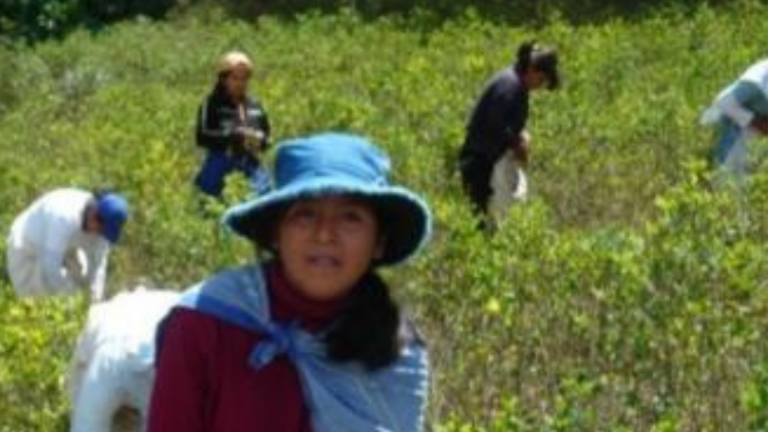
#GHRL In Bolivia, the most despicable crimes against children—abuse and sexual and labor exploitation—are committed through organized crime protected by the Government.
Commercial sexual exploitation of children is the exploitation by an adult of a boy, girl, or adolescent under 18 years of age, accompanied by payment in cash or in kind to the child or to a third party or parties.
Unfortunately, there is no data on sexual abuse and exploitation in Bolivia. Although several efforts have been made in coordination with various local and international organizations, none have been able to establish statistical data; instead, they provide only a general overview of the problem faced daily by Bolivian children.
The same reason no organization has seriously addressed this problem, which affects every social and economic stratum, is what allows criminals to roam free, abusing and exploiting minors.
In Bolivia, as in Nicaragua, addressing this issue under the governments currently in power is very difficult, since Evo Morales, former president and leader of the government that now administers the country, has been formally accused of sexual abuse.
The administration of the Movement for Socialism (MAS) has seized all branches of power, and those who dare to report such crimes are persecuted, sometimes forced into exile, imprisoned, or even killed. No authority wants to take up these cases or do anything about them.
Context
Bolivia ratified the Convention on the Rights of the Child through Law No. 1152 of May 1990, becoming the eighth country to express its adherence, after which it began adapting national legal norms and implementing public policies under a comprehensive protection approach.
Although the legal age of majority in Bolivia is 21, men may marry at 16 and women at 14 with parental or guardian consent.
Since 2014, Bolivia has been the only country to expressly permit child labor starting at age ten, which violates International Labour Organization conventions.
In Bolivia, children are criminally liable starting at age 16.
The fact that Bolivia is a party to the Convention on the Rights of the Child while allowing boys to marry at 16 and girls at 14—when they are still developing—helps perpetuate a society that never fully educates itself, because marriage brings adult responsibilities that hinder full schooling or preparation to face life with less hardship and without falling into extreme poverty.
Allowing children to legally work from age 10, in violation of international treaties, also keeps the population in a position of limited education, generating poverty and inequality.
Challenges and gaps in the child protection system
First, the fact that children can legally work from age 10 violates the Rights of the Child; not even UNICEF, which has a presence in the country, has been able to do anything about this crime against children.
Second: how is it possible that authorities go unpunished for crimes of rape and abuse against minors? How is it possible that pedophilia is normalized in a highly conservative country, simply because high spheres of government practice this abomination?
Third, returning to the first point, cocaine production is also operated from within the government. Bolivia is the third-largest producer and exporter of drugs in South America; children not only suffer from addiction but are also exploited in the laboratories that produce this crime, working both in the fields and in the factories.
Solutions
The only way the government can change this reality in Bolivia is through international pressure; the parliamentary opposition must work functionally to remain in its positions. Civil society faces grave risks if it attempts to act—only international sanctions and reprisals could shift the course of these issues afflicting Bolivian children.
As long as Bolivia lives under a dictatorship, it will be very difficult to change the present of its children: it is those in power who protect the rings of labor and sexual exploitation of minors so that criminals can keep operating.
Key stakeholders
All Bolivians have a stake in changing the present and future of our children in Bolivia. We must all recognize that this is a problem for every citizen and inhabitant of Bolivian territory: they are our children, they are our future.
Local and international organizations have failed to produce figures, which is evidence either that they are complicit or that the dictatorship has silenced them. Complicity is an act, and therefore a crime. Such silence is alarming, especially when it comes to the human rights of children.
Eva Sara Landau – March 10, 2022